English| USD
Suggested for you
More currencies
Choose a language
Two capitals of the western Balkans sit barely 130 kilometres apart, yet an international frontier stands between Tirana and the shores of Lake Ohrid. This guide sets out what that journey actually involves — the corridor it follows, the crossing it requires, and the hours of the day that decide whether it runs smoothly. Read it as orientation before the detailed route, timing and checklist sections below.
Quick answer
The journey runs from Tirana, Albania to Ohrid, North Macedonia, and the border transit itself costs 0 EUR — free entry, as a public crossing. Crossing points operate 00:00–23:59, seven days a week, so no departure hour is closed to you. The recommended arrival window is 08:00–12:00, which avoids afternoon traffic and leaves enough time for border formalities.
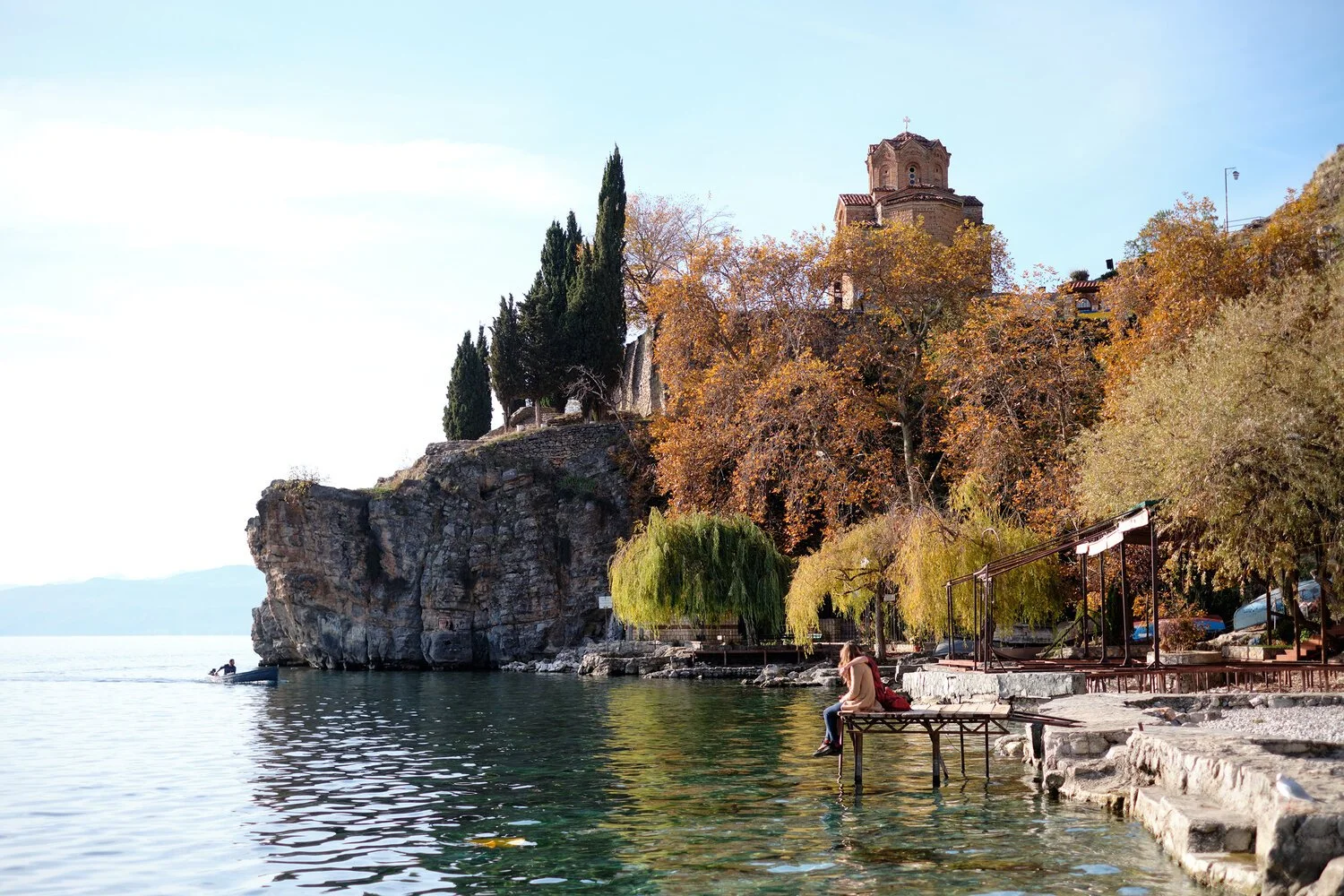
Lake Ohrid is among the oldest lakes on Earth — geologists put it between one and three million years old — and it holds more than 200 endemic species found nowhere else. That antiquity is invisible from a car window, which is part of why the approach matters. The corridor east from Tirana climbs out of the coastal plain, tracks the Shkumbin valley past Elbasan, and lifts into highland country before the frontier. Travellers researching how to get from tirana to ohrid are, in practice, researching a mountain crossing between two states, not a simple intercity hop. The geography explains the rest. Albania's capital sits close to sea level; Ohrid stands roughly 700 metres up on the lake's northeastern shore. Between them lie the Mokra highlands, the Struga plain, and the frontier itself. Distances on a map understate the effort — gradients, single-carriageway stretches and the pace of the road through Librazhd all add time that a straight-line measurement hides. Anyone comparing options for a Tiranë–Ohrid transfer should treat the frontier as the fixed point of the day and build the schedule outward from it, since the crossing operates continuously but the volume passing through it does not stay constant. Context also shapes what the journey is for. Ohrid's old town is a UNESCO World Heritage site, listed for both its cultural and natural values: the Church of St. John at Kaneo above the water, the Samuel's Fortress walls on the ridge, the Plaošnik archaeological complex, the lakeside boardwalk beneath the cliffs. These are afternoon-and-evening places, best seen with light to spare, which is why the arrival window of 08:00–12:00 exists as a recommendation rather than a formality. The practical conclusion is straightforward. Treat the corridor as a half-day commitment, anchor the plan to a morning arrival, and confirm the documents and transport method in the dedicated sections that follow rather than improvising on the road. Independent drivers, scheduled coach passengers and organised day-trip travellers all face the same frontier and the same mountain road; what differs is who handles the logistics. Read this how to get from tirana to ohrid guide alongside the route, timing and checklist panels below, and the Lake Ohrid landmarks at the far end become the point of the day rather than a rushed postscript to it.
“Treat the frontier as the fixed point of the day and build the schedule outward from it.”
Tirana and Ohrid are connected by a journey across the Albanian-North Macedonian border. Travelers typically utilize private transfers, rental cars, or bus services to navigate the route between the two cities.
SH3 highway via Elbasan and Qafë Thanë border crossing
Direct bus from Tirana Regional Bus Terminal to Ohrid
Private transfer service door-to-door
The best arrival window is 08:00–12:00, which avoids afternoon traffic and ensures sufficient time for border crossing formalities.
The best arrival window for traveling from Tirana to Ohrid is 08:00–12:00. Arriving during this period helps avoid afternoon traffic peaks and ensures sufficient time for border crossing formalities.
Mild temperatures (15°C–25°C); ideal for sightseeing. Avoids peak summer heat and congestion.
Warm temperatures (25°C–35°C); busy season for lake activities. Expect longer wait times at the border.
Cooler temperatures (10°C–20°C); pleasant for outdoor exploration. Consistent weather patterns for transit.
—; Arriving between 08:00 and 12:00 significantly reduces transit delays compared to weekends.
Verdict: The concrete best slot is weekday mornings between 08:00 and 12:00 during the months of April, May, September, or October.
This procedure walks you through the border crossing itself, from preparing your documents before departure to clearing the Macedonian checkpoint and continuing toward Lake Ohrid. The crossing formalities themselves typically take a fraction of the journey, though queue length at the checkpoint varies.
Have your passport and, if driving, the vehicle registration and green card insurance certificate accessible before you reach the queue. The common mistake is packing documents in checked luggage or the boot, then holding up the line while retrieving them.
Route via Qafë Thanë or Tushemisht, the two crossings serving the Tirana–Ohrid corridor along the lake's southern and northern shores. People often assume any border post will do and end up detouring an hour after following a generic map pin.
Stop at the Albanian booth first and hand over passports for every person in the vehicle, including children. Travellers frequently drive through assuming the two checkpoints are one stop, which requires reversing back under officer instruction.
Proceed a short distance to the North Macedonian booth for entry stamping and any vehicle document inspection. Keep engines idling and windows down; officers may ask passengers to step out for a boot check.
Before pulling away, check that the passport carries a legible Macedonian entry stamp with the correct date. A missing stamp creates problems on exit and is far easier to fix while still at the checkpoint.
Follow the lakeside road from the border toward Ohrid's old town and harbour. The crossing itself is free entry as public border transit, so no payment stop is involved.
There are no entrance fees required to cross the international border between Tirana and Ohrid. All costs associated with this journey are strictly related to your chosen method of transportation.
Verdict: The entry fee is 0 EUR, and total trip costs depend entirely on the transport provider you select.
Working through these items in order — starting a few weeks out and finishing the morning you leave — keeps the Tirana to Ohrid journey free of paperwork surprises.
Everything you need to know about how to get from tirana to ohrid
Travelers looking for how to get from tirana to ohrid can choose between private transfers, rental cars, or shared transport services. Each option requires navigating international roads and customs checkpoints between Albania and North Macedonia.
Public buses operate on limited schedules, making it essential to plan your departure in advance to ensure a smooth trip. Understanding how to get from tirana to ohrid via public transport involves checking current regional timetables before your departure date.
The travel time varies depending on the chosen vehicle and border crossing wait times. Most visitors find that knowing how to get from tirana to ohrid helps in budgeting enough daylight hours for the transit.
The best arrival window is 08:00–12:00, as this timeframe avoids peak afternoon traffic congestion. Following this schedule helps travelers navigate the route efficiently while ensuring sufficient time for border formalities.
Public border transit requires an entrance fee of 0 EUR. Please note that while the transit itself is free, private operators or shuttle services will charge for their specific transportation offerings.
Travelers must carry a valid passport or national ID card that meets the entry requirements for both Albania and North Macedonia. Ensure your documents are readily available when presenting them to border guards during your journey.
Various tour operators provide day trips to the lake, which simplify logistics for those who prefer not to drive. These excursions often provide structured itineraries, allowing you to enjoy the historic town and surrounding mountain views without managing the transit details yourself.